Top 10 Things to Do in Tennessee, USA for an Unforgettable Experience


From the mist-softened ridgelines of the Great Smoky Mountains to the wide bends of the Mississippi River, Tennessee is a state that’s shaped by rhythm, landscape and stories that linger long after you leave.
Sure, music is part of everyday life here – but so too is the pull of the outdoors, whether that means mountain roads, waterfalls or picturesque valleys that reward unhurried travel.
For many visitors, Tennessee is first associated with sound.
Nashville’s live music venues, Memphis’s deep roots in American soul music, and the artists who recorded here helped define entire genres. Yet the state’s appeal goes far beyond its musical reputation. National parks, scenic drives and historic sites sit comfortably alongside creative cities, making it easy to combine culture and nature in a single trip.
Smaller places play an important role too, from the riverside setting of Chattanooga to historic towns like Franklin and gateway communities such as Sevierville at the edge of the Smoky Mountains.
What sets Tennessee apart is its balance. Distances between regions are manageable, making it well suited to a road trip or flexible itinerary.
You could spend the morning exploring a historic music venue, then find yourself hiking forest trails or taking in panoramic views by the afternoon. It’s this variety that makes Tennessee attractions feel layered rather than overwhelming.
This guide to the top things to do in Tennessee focuses on experiences that define the state. From iconic music landmarks to landscapes shaped by time and water, these Tennessee things offer a thoughtful way to visit the state and understand what makes it such a distinctive destination.
Top Things to Do in Tennessee USA:
Experience the Grand Ole Opry
An evening at the Grand Ole Opry is one of the most enduring ways to experience Tennessee. First broadcast in 1925, the Opry has played a central role in shaping country music, yet it remains very much alive, not preserved. This isn’t a museum piece, but a working stage where tradition and contemporary voices continue to blur.
What makes the Grand Ole Opry distinctive is its format. Performances unfold as a sequence of short sets instead of a single headline act, allowing multiple artists to take the stage in one evening.
Between songs, hosts share stories and introductions that give context to the music and the musicians. The result feels intimate and welcoming, even within the large Opry House, with the focus placed firmly on live music and storytelling.
Country music is woven into everyday life in Tennessee, and nowhere is that more apparent than here. Long-time fans sit alongside first-time visitors, drawn by curiosity as much as loyalty to the genre. Even if country music isn’t usually part of your listening rotation, the quality of the songwriting and musicianship tends to transcend expectations.
For those wanting a deeper understanding of the Opry’s place in Tennessee’s cultural identity, backstage tours offer a quieter perspective.
Walking through the corridors and standing where generations of artists have waited to perform adds a sense of continuity to the experience. As an introduction to Nashville and to the state more broadly, the Grand Ole Opry sets the tone, grounding Tennessee’s musical reputation in something personal, human and still evolving.

Visit the Country Music Hall of Fame and Ryman Auditorium
To understand how Tennessee became synonymous with country music, a visit to the Country Music Hall of Fame is a must-do.
Located in downtown Nashville, this expansive museum traces the evolution of country music from its early roots through to its global influence today, placing the genre firmly within the wider story of American culture.
The exhibitions are thoughtfully structured, combining artefacts, recordings and personal stories from the artists who shaped the sound.
Handwritten lyrics, stage costumes and instruments reveal how country music developed alongside social change, technology and shifting audiences. Not just focusing purely on celebrity, the museum highlights craft and continuity, showing how one generation of musicians influenced the next.
Just a short walk away, the Ryman Auditorium gives a more immediate connection to that history. Often described as the birthplace of country music, the Ryman was the original home of the Grand Ole Opry and remains one of the most respected live music venues in the United States. Its wooden pews, stained glass windows and exceptional acoustics create an atmosphere that feels intimate despite the building’s scale.
Experiencing these two landmarks together provides valuable context. The Country Music Hall of Fame explains the story, while the Ryman allows you to feel it. Whether you attend a live performance or take a guided tour, this pairing is one of the most rewarding Tennessee attractions for music lovers and a key part of any visit to Nashville.

Discover American Soul Music in Memphis
If Nashville represents the heart of country music, Memphis is where American soul music found its voice.
Set along the Mississippi River, the city has long been shaped by movement, migration and cultural exchange, all of which fed into a sound that was raw, expressive and deeply rooted in lived experience. Exploring Memphis through its music gives insight not just into a genre, but into the social history of Tennessee itself.
One of the most influential stops is Sun Studio, where early recordings helped change the course of popular music. The studio’s modest size is part of its power. Artists including Elvis Presley recorded here at pivotal moments, helping bridge blues, gospel and rock ’n’ roll.
A short distance away, the Stax Museum of American Soul Music explores a different but closely connected story. Soul music developed here alongside the civil rights movement, and the museum places that context front and centre. Exhibits focus on the musicians, producers and communities who shaped the sound, tracing how American soul music became both artistic expression and cultural force.
Music here isn’t presented as nostalgia, but something that continues to influence the city’s identity. For travellers interested in history, culture and sound, Memphis remains one of the most compelling Tennessee attractions and a defining stop when visiting the state.

Image Credit: Stax Museum of American Soul Music
Walk Beale Street and Experience Live Music
No visit to Memphis feels complete without spending time on Beale Street, one of the most recognisable music streets in the United States.
For more than a century, this short stretch of road has been a focal point for blues, soul and live performance, helping to shape the sound that would later influence American soul music far beyond Tennessee.
Beale Street is best experienced on foot and without a strict plan.
During the day, its historic buildings and plaques hint at the stories that unfolded here. In the evening, the street comes alive as live music spills out from open doorways and small stages. Clubs like King’s Blues Club carry on long-standing traditions, offering sets that range from classic blues to modern interpretations rooted in the same musical lineage.
While the annual Beale Street Music Festival draws large crowds, Beale Street remains rewarding outside festival season. On a regular night, performances feel informal and close to the audience, with musicians playing solely for the room.
An hour or two is usually enough to absorb Beale Street’s rhythm. We recommend it as an evening experience, paired with dinner nearby or a walk toward the river afterward. As part of a broader Memphis visit, Beale Street is a lively counterpoint to the city’s museums and studios, reinforcing why live music remains central to Tennessee’s cultural identity.

Visit the Great Smoky Mountains National Park
Moving east from Tennessee’s music cities, the landscape begins to change almost imperceptibly.
Roads narrow, forests thicken and the air cools as you approach the Great Smoky Mountains National Park, a vast protected area that stretches along the Tennessee-North Carolina border. It’s the most visited national park in the United States, yet it remains defined by atmosphere.
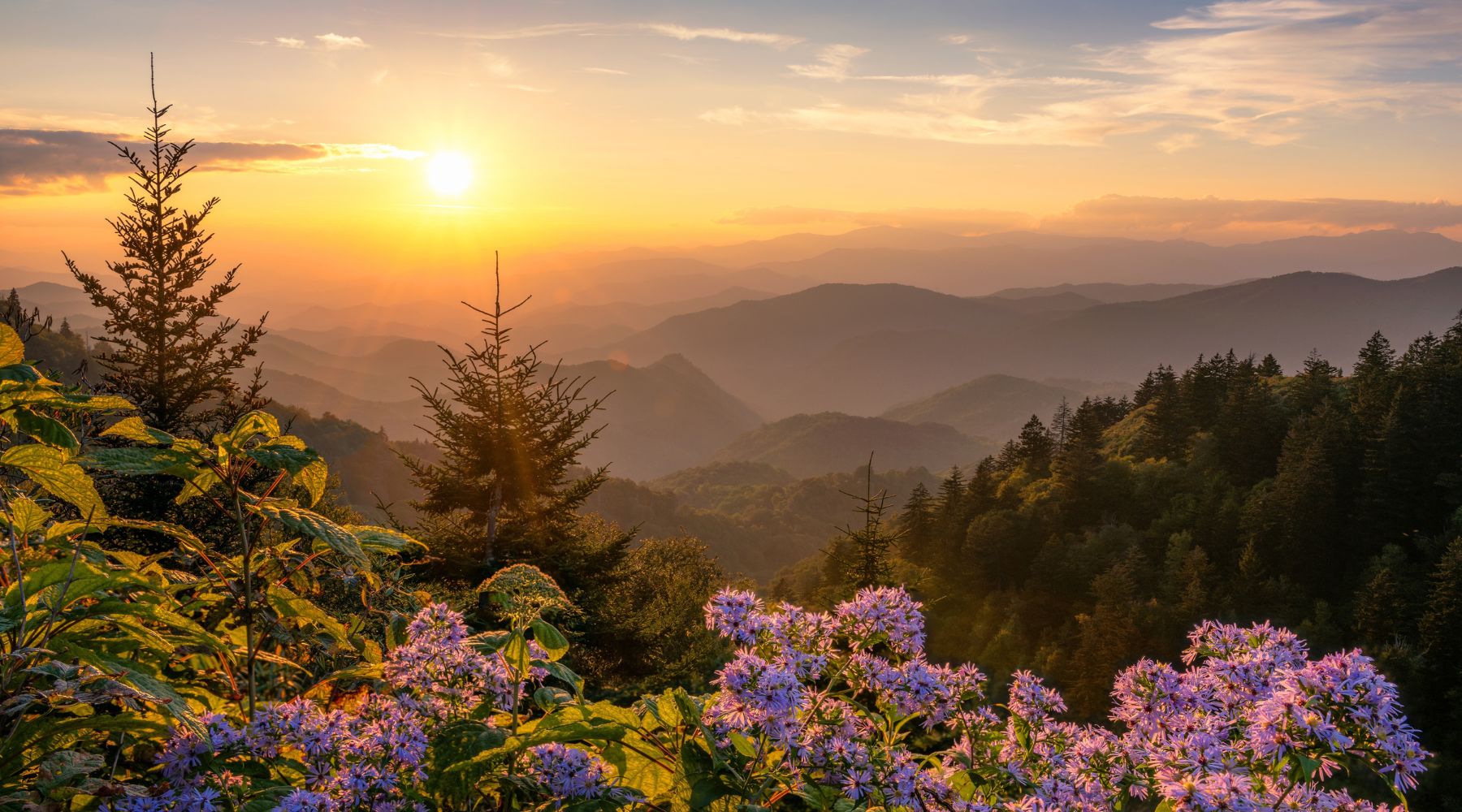
The Great Smoky Mountains National region is known for its layered scenery. Forested ridgelines recede into one another, often softened by mist that settles into the valleys during early mornings and late afternoons. This mountain range doesn’t rely on dramatic peaks to impress. Instead, its beauty unfolds gradually, rewarding those who slow down and pay attention to shifting light, sound and texture.
Exploring the park is unusually accessible. Scenic drives provide regular viewpoints and pull-offs, while a wide network of hiking trails ranges from short woodland walks to longer routes that climb toward higher ground. Even without setting out on a full hike, it’s easy to experience the park’s natural beauty, whether through secret riverside areas or gentle forest paths.
Within the Great Smoky Mountains National Park, the Cades Cove Loop Road provides one of the most immersive ways to experience the landscape. This one-way loop winds through a wide, open valley framed by forested hills, combining natural beauty with some of the park’s most significant historic sites.
A morning spent driving through the park or walking a short trail can be followed by lunch in a nearby town or an afternoon exploring historic valleys. This balance of ease and immersion is what makes a visit to the Great Smoky Mountains National Park one of the most memorable Tennessee attractions.
Take in Panoramic Views from Kuwohi
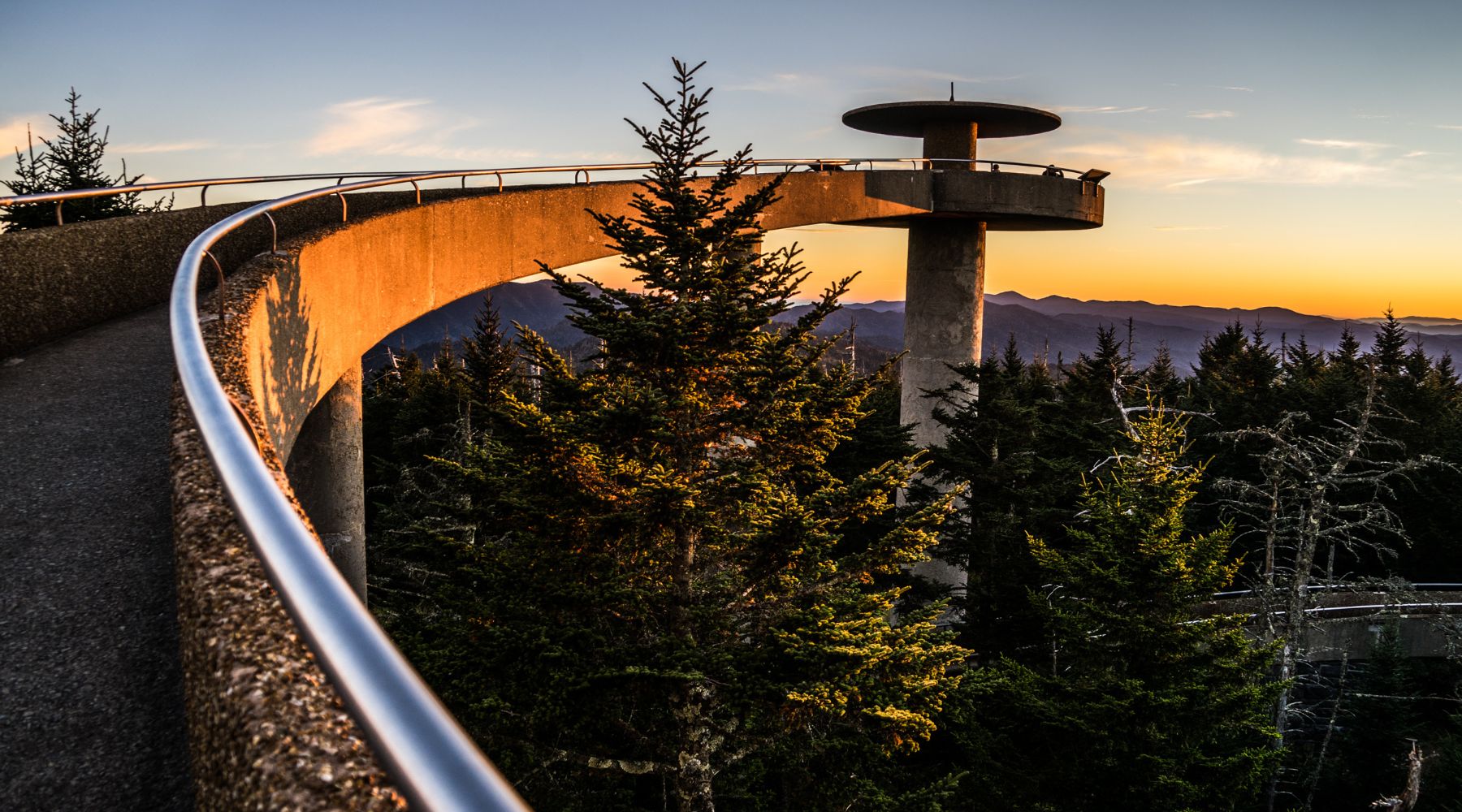
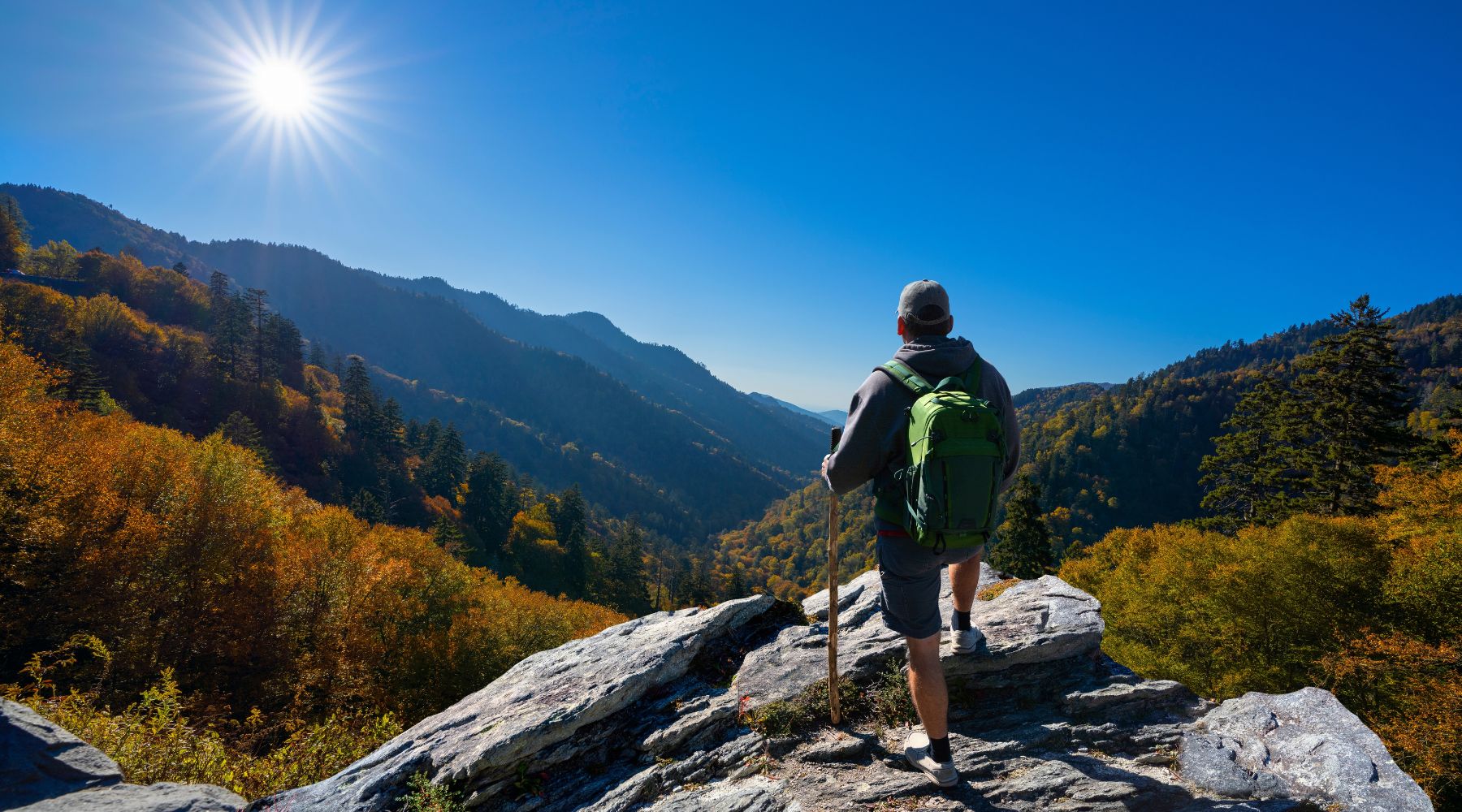
At the highest point in Tennessee, Kuwohi (formerly known as Clingmans Dome) is a moment of elevation and perspective within the Great Smoky Mountains. From here, panoramic views stretch across the surrounding mountain range, with layered ridgelines fading into the distance in soft shades of blue and green.
Reaching the summit requires only a short walk from the parking area – though the paved path is steep enough to slow your pace. This brief climb is part of the experience, encouraging pauses to look back over the forest canopy as the trees begin to fall away. At the top, an observation tower rises above the ridge, opening the view in every direction and making the scale of the Smoky Mountains immediately apparent.
Conditions at Kuwohi can change quickly. Clear mornings often offer the widest views, while cloud and mist are common later in the day. Instead of detracting from the experience, shifting weather adds atmosphere, turning the landscape into something softer and more contemplative. Visibility may come and go, but the sense of place remains strong.
Kuwohi works best as a brief but memorable stop, paired with nearby hiking trails or a scenic drive through the park. It provides a natural high point within a visit to the Great Smoky Mountains National Park, reinforcing why this landscape is considered one of Tennessee’s most defining natural attractions.
Take Time to Explore Tennessee’s Smaller Towns
Some of Tennessee’s most memorable moments happen away from headline attractions. Between the state’s larger cities and national parks, smaller towns offer a slower pace and a more local perspective, often becoming the places travellers remember most clearly.
Towns like Franklin, just south of Nashville, reward an unhurried visit. Historic streets, independent shops and easy-going cafés create natural pauses on a road trip through Middle Tennessee, offering a contrast to the energy of the capital. Further east, gateway communities such as Sevierville provide a practical base near the Smoky Mountains, while still feeling grounded in everyday life rather than tourism alone.
In and around Chattanooga, smaller neighbourhoods and nearby towns sit close to rivers and walking trails, making it easy to combine time outdoors with relaxed evenings back in town. These places aren’t a case of ticking off sights, but enjoying the rhythm: lingering over coffee, wandering historic centres or following quieter roads simply to see where they lead.
Building space for these towns into your itinerary adds depth to a Tennessee trip. They break up longer drives, soften the transition between major highlights and offer a sense of continuity between music cities and mountain landscapes. In many cases, it’s these quieter stops that give Tennessee things their most personal and unforced character.

Wander Downtown Gatlinburg and Cross the Gatlinburg SkyBridge
Set at the entrance to the Great Smoky Mountains National Park, Downtown Gatlinburg is a natural transition between mountain landscapes and town life. Forested slopes rise behind the streets, and the rhythm of the town is closely tied to the flow of visitors heading into and out of the park.
A walk through downtown Gatlinburg is best approached at a relaxed pace. While the main strip can feel lively, especially during peak seasons, stepping slightly away from the busiest areas reveals a calmer side of the town. Cafés, small shops and viewpoints provide easy pauses, making it a comfortable spot to spend an hour or two between hikes or scenic drives.
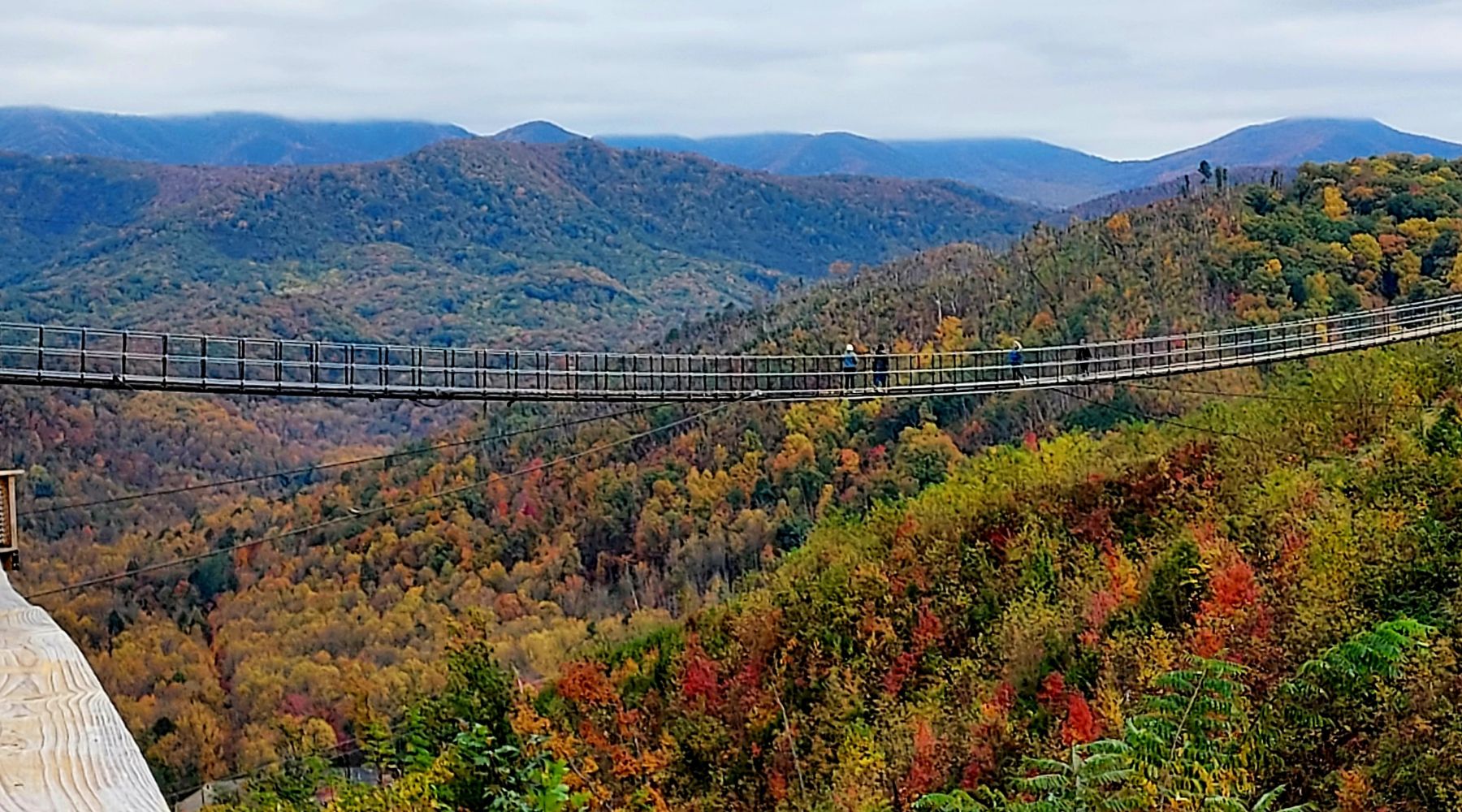
One of Gatlinburg’s most distinctive attractions is the Gatlinburg SkyBridge, which stretches high above the valley floor. Crossing the bridge offers wide, uninterrupted views back toward the town and out across the surrounding mountain range. The sense of height is immediate, yet the experience feels more reflective than thrilling, particularly in softer morning or late-afternoon light.
Downtown Gatlinburg is ideal as a short stop, not a base. Paired with time spent in the Smoky Mountains, it provides contrast and convenience, grounding the outdoor experience in a small-town setting that remains closely connected to the landscape beyond it.
See Fall Creek Falls State Park
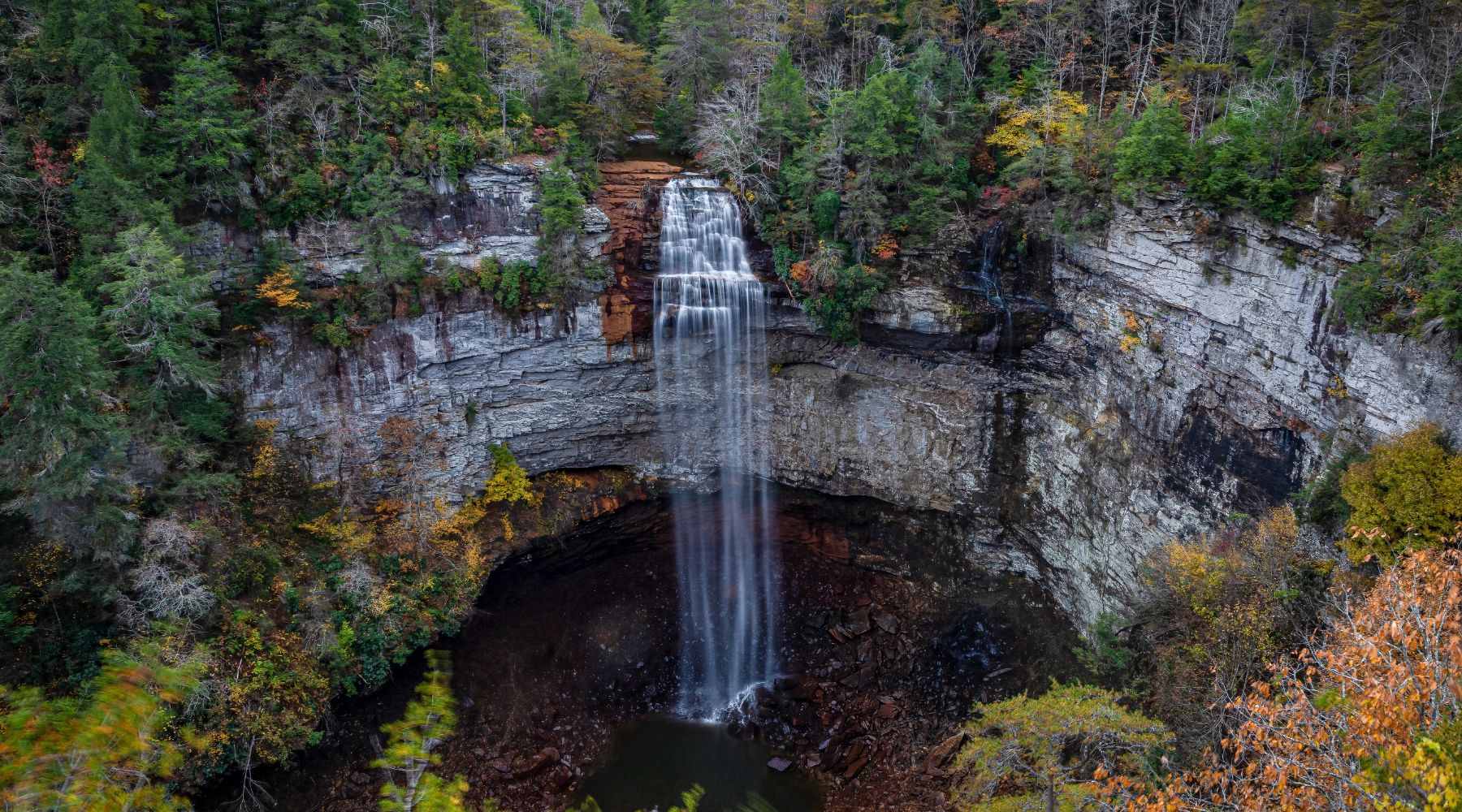
In the eastern edge of the Cumberland Plateau, Fall Creek Falls State Park serves as one of the most striking natural settings in Tennessee. Defined by deep gorges, forested cliffs and cascading water, the park presents a different expression of the state’s natural beauty from the Smoky Mountains, one shaped by depth, not elevation.
The park’s centrepiece is Fall Creek Falls itself, a dramatic waterfall that drops into a wide, wooded basin below. Several overlooks provide easy access to views of the falls, while a network of hiking trails allows visitors to explore the surrounding landscape at a slower pace. Paths range from short, well-maintained walks to longer routes that descend into the gorge, offering changing perspectives on the scenery.
Fall Creek Falls State Park is particularly impressive for travellers who enjoy unhurried outdoor experiences. Wooden bridges, shaded trails and steady gradients make it accessible without feeling overly developed. Seasonal changes add to its appeal, from heavier spring water flow to autumn colours that soften the forested slopes.
Often quieter than Tennessee’s national parks, Fall Creek Falls suits those looking to slow down and spend time in nature without large crowds. It doesn’t matter whether you visit as a dedicated stop or as part of a broader road trip through Middle Tennessee: it’s one of the most memorable Tennessee attractions for lovers of hiking trails, waterfalls and open space.
Go Underground at Ruby Falls
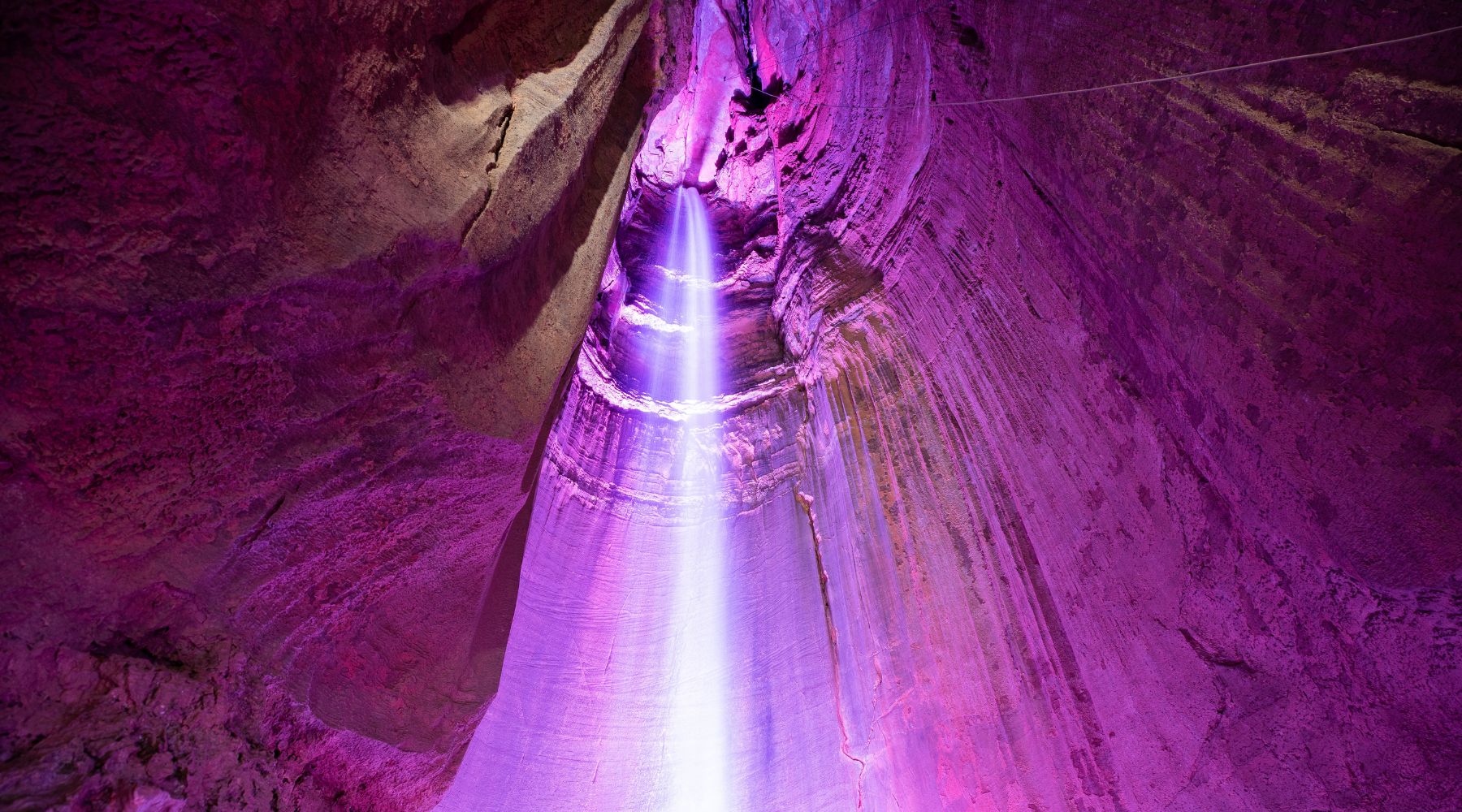
Hidden deep within Lookout Mountain, Ruby Falls reveals a lesser-seen side of Tennessee’s natural beauty. Reached by descending into a limestone cave system, this experience ensures a striking contrast to the open views of the Smoky Mountains and Cumberland Plateau.
Visits to Ruby Falls are guided, with pathways winding through chambers shaped by centuries of slow geological change. Stalactites, rock formations and narrow passages create a quiet sense of anticipation as the sound of falling water grows closer. When the waterfall finally comes into view, it feels dramatic yet contained, framed by cavern walls instead of wide horizons.
The appeal of Ruby Falls lies in its atmosphere. The temperature remains cool year-round, making it a comfortable stop in warmer months, and the pace of the tour encourages visitors to slow down and take in details that might otherwise be overlooked. It works particularly well as a complement to outdoor activities, offering a sheltered, reflective experience after time spent hiking or driving scenic routes.
Located near Chattanooga, Ruby Falls fits easily into a broader visit that may include viewpoints on Lookout Mountain or time along the Tennessee River. As the final stop in this list, it highlights the diversity of Tennessee attractions, showing that some of the state’s most memorable experiences are found not only across its landscapes, but beneath them as well.
How to Plan a Tennessee Road Trip
Tennessee works exceptionally well as a road trip destination, thanks to manageable distances and well-connected routes between major regions.
Many of the top 10 things to do in Tennessee USA can be linked together over a single itinerary, particularly when travelling between Nashville, Memphis and the Great Smoky Mountains.
Roads through Middle Tennessee are generally easy to navigate, with rolling countryside and smaller towns like Franklin providing natural breaks between longer drives.
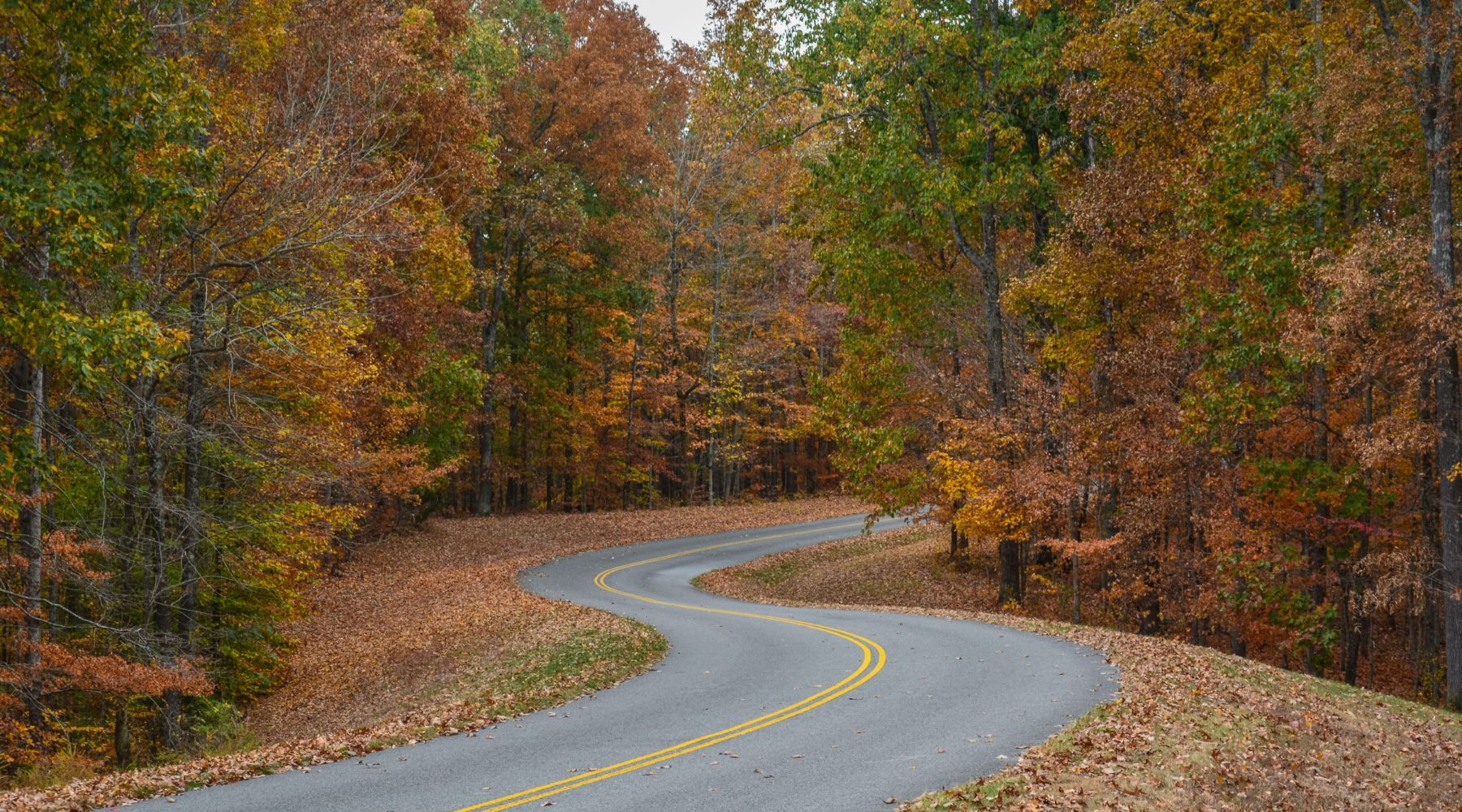
Scenic routes are a key part of the experience. Drives through the Great Smoky Mountains National Park reveal changing mountain scenery, while quieter stretches following the Tennessee River offer a slower pace and a strong sense of place.
Allowing time for scenic drives, short hikes and unplanned stops often leads to the most rewarding moments. For many visitors, travelling by car is the easiest way to visit Tennessee and explore its most memorable attractions at a relaxed pace.
Music, History and Cultural Landmarks to Prioritise
Music remains one of the defining Tennessee attractions, but its character changes noticeably by region.
In Nashville, country music is central to the city’s identity, shaped by iconic venues and a constant calendar of live performances. Memphis, by contrast, is closely associated with American soul music, blues and early rock ’n’ roll, reflecting the city’s role in shaping modern American sound and culture.
These musical landmarks are closely tied to wider historical narratives. Sites connected to the civil rights movement, including the National Civil Rights Museum at the Lorraine Motel, provide essential context for understanding the state’s cultural evolution.
Visiting these places alongside music venues creates a fuller picture of Tennessee’s past and present, making them must visit stops for travellers interested in history as well as sound.

More Outdoor Scenery, Hiking Trails and National Parks
Tennessee’s natural beauty is one of its greatest strengths, particularly for travellers who enjoy time outdoors.
In and around Chattanooga, this landscape feels particularly accessible, with Lookout Mountain, river viewpoints and cave systems sitting close to the city.
Gateway towns like Sevierville provide practical access to the Smoky Mountains, while keeping the focus on scenery.
Beyond the Smokies, state parks such as Fall Creek Falls highlight a different side of Tennessee’s landscape, with waterfalls, gorges and forested plateaus adding depth and variety.
These areas are well suited to slower exploration, whether through short walks or longer hikes, and are often quieter than major national park hubs. For many visitors, this combination of accessible trails and beautiful scenery is what makes Tennessee things feel both memorable and unforced.
Your Trip to Tennessee: Getting There and Quick Tips
Tennessee is easy to reach and straightforward to travel around, which is part of its appeal. Most visitors arrive via Nashville or Memphis, both of which have well-connected international and domestic airports.
Chattanooga also works well for trips focused on the southern Appalachians and Lookout Mountain. From there, hiring a car is the easiest way to explore, particularly if you plan to visit national parks or smaller towns.
Driving distances between major regions are manageable, making Tennessee well suited to a road trip. Nashville to the Smoky Mountains takes around four hours, while Memphis to Nashville is roughly three. Roads are generally well maintained, though mountain routes can be slower and more winding than expected.
Spring and autumn are widely considered the best times to visit, offering comfortable temperatures and seasonal colour in the mountains. Summer brings warmer weather and higher humidity, while winter is quieter but can bring snow at higher elevations.
A final tip: build in breathing room. Tennessee rewards unhurried travel, whether that means lingering at a live music venue, taking a scenic drive, or allowing extra time for short walks and viewpoints along the way.
Ready to book your Tennessee Holiday?
Are you ready to plan your trip to Tennessee and experience all that the state has to offer? Have a look at our choice of itineraries or speak to one of our USA Travel Experts today to plan your bespoke Tennessee holiday.
Explore our new Tennessee itinerary here.
Image Credit: Brand USA, Visit Franklin and Tennessee Tourism.
Inspire
Your edit for North America inspiration
Inspired by the landscapes, culture, wildlife and cuisine of Canada and the USA, explore our entertaining range of articles, travel tips, destination guides, recipes and much more.
View Extraordinary Inspiration






Meet Our Team
Real North America Travel Experts









Why Journeyscape?
We love north america
- Up-to-the-minute knowledge underpinned by 40 years experience
- All of our Travel Experts have personal knowledge of the destination
- A passion for the region runs through all we do
Travel with Confidence
- Fully bonded and licensed
- ATOL-protected
- Book with confidence, knowing every penny is secure
- 24 hour help available at every step of your journey
The Real North America
- Our insider knowledge helps you go beyond the guidebooks
- We hand-pick hotels both for their character and services
- We'll give you authentic experiences based on your personal preferences
Journeyscape brought to you from the award-winning experts at Journey Latin America
