The Best National Parks in British Columbia, Canada


Situated in the westernmost part of Canada, British Columbia is one of the world’s premier nature destinations and a natural choice for multi-stop adventures. Its breathtaking landscapes offer everything from rugged Pacific coastlines and ancient temperate rainforests to glacier-covered mountains, alpine meadows and remote islands—with abundant wildlife and marine life found in every corner.
Whether you’re planning a day trip, a week-long road trip or an ambitious backcountry expedition, BC’s national parks rank among the best places to visit in British Columbia, each offering a unique window into its extraordinary wilderness.
This guide focuses on British Columbia’s seven national parks, highlighting the best each has to offer, while revealing that BC is one of the few places in the world where travellers can explore different ecosystems within a single trip. Whether you’re a couple, solo traveller, nature-loving family, wildlife enthusiast or backcountry adventurer, we’ll also show you how to connect these diverse regions into a memorable journey across the province—from coast to rainforest, islands to alpine peaks—ideal for those seeking tailor-made holidays crafted around their individual travel style and preferences.


Glacier National Park
Nestled in a part of the Columbia Mountains, Glacier National Park delivers dramatic alpine scenery, towering peaks, and easy access via the historic Rogers Pass corridor.
What makes Glacier particularly special is its concentration of glaciers and icefields, as well as its role in Canada’s railway history. The park offers some of the most impressive mountain landscapes in British Columbia, and visitors who aren’t comfortable with the challenging terrain will still find astounding views at one of the park’s picnic areas, like the Rogers Pass Summit. It pairs especially well with nearby mountain parks for a Rockies-focused road trip.
Best For: Experienced hikers, photographers, mountaineers and winter recreation enthusiasts, particularly those interested in alpine walking holidays.
Key Strengths
- Dramatic icefields and glacier views
- Outstanding alpine hiking
- Rogers Pass railway history and interpretation
- Excellent winter ski touring opportunities
Possible Limitations
- With limited lodging inside the park, Glacier National Park rewards those who plan ahead with a more tranquil, exclusive experience surrounded by unspoilt wilderness.
- Its rugged backcountry might not be suitable for beginners, but it invites a deeper connection to nature, where expert-led, tailor-made explorations turn every challenge into a memorable highlight.


Kootenay National Park
Stretching from the southwestern slopes of the Canadian Rocky Mountains into the Columbia Valley, Kootenay National Park features striking contrasts including canyons, forests, rivers, fossil-bearing formations and thermal springs.
Kootenay stands out for its geological diversity and proximity to world-class fossil resources. The park also provides easy access to the famous Radium Hot Springs where one can stop for a relaxing soak, making it a rewarding contrast to BC’s higher alpine parks within a wider touring route.
Best For: Travellers seeking a mix of hiking, relaxation, geology and scenic driving.
Key Strengths
- Burgess Shale fossil sites access
- Marble Canyon
- Radium Hot Springs
- Diverse landscapes in a compact area
Possible Limitations
- While road conditions can vary and some routes close outside peak months, this ensures a quieter, more peaceful experience and beautifully unspoilt landscapes when visiting at the right time.
- Fossil sites often require pre-booked guided access, but this offers a more enriching experience with knowledgeable insights that bring Kootenay’s ancient history vividly to life.


Yoho National Park
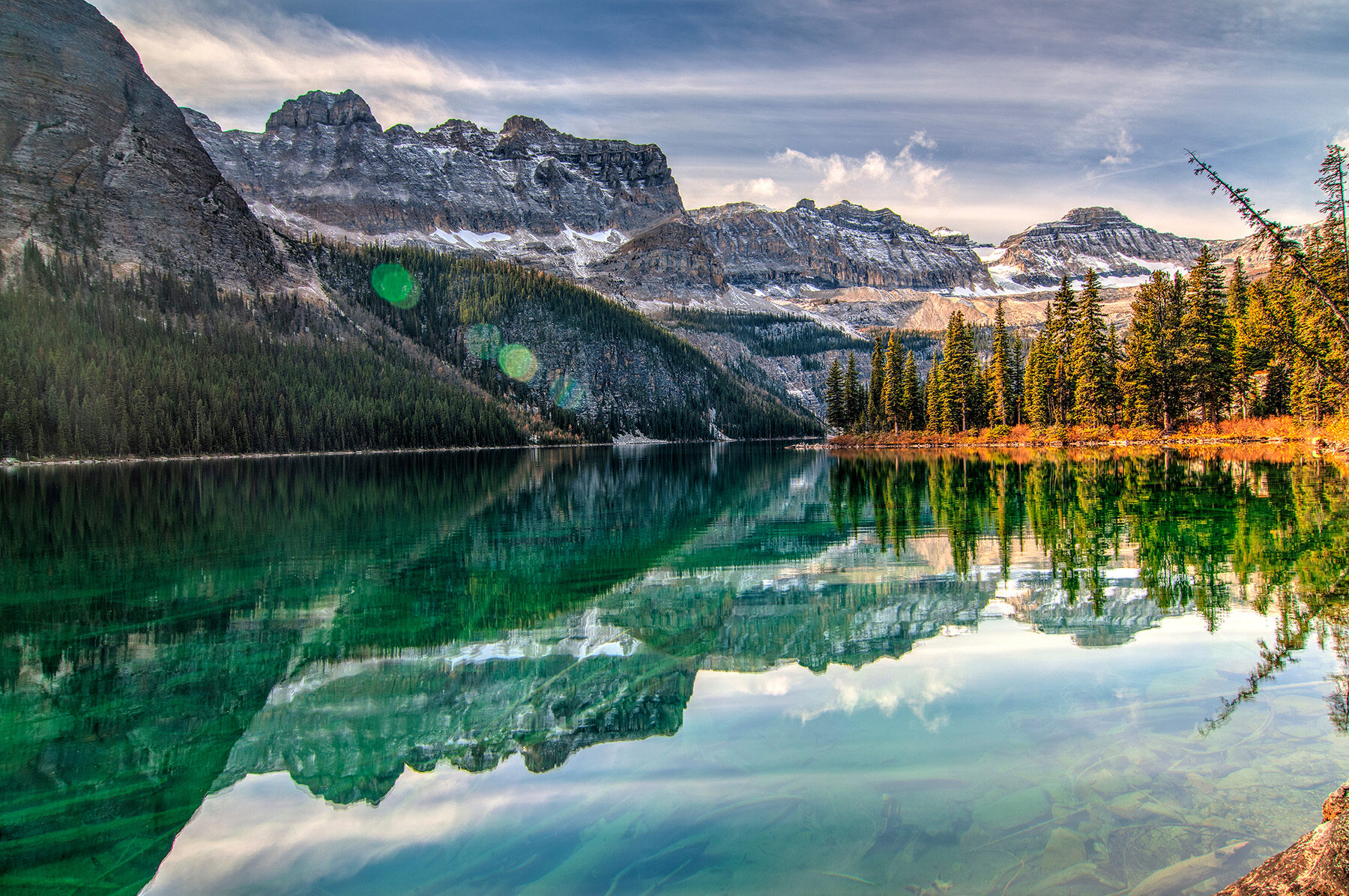
Named after the Cree expression for “awe” or “wonder” Yoho National Park aptly combines towering waterfalls, turquoise lakes and spectacular mountain scenery into one of the Canadian Rockies’ most rewarding destinations.
Its location beside other must-see locations like Banff and Kootenay makes Yoho a natural addition to larger Rockies itineraries while offering a quieter atmosphere than the neighbouring parks. The park also shares access to the Burgess Shale fossil site for those interested in exploring millennia-old history. For travellers building a multi-stop BC holiday, Yoho adds waterfalls, lakes and classic mountain scenery in one accessible stop.
Best For: Families, hikes, photographers and first-time Rockies visitors.
Key Strengths
- Takakkaw Falls
- Burgess Shale guided tours
- Beautiful lake hikes
- Excellent road-trip accessibility
Possible Limitations
- Accommodation can be difficult to secure in peak summer, but our Travel Experts can help you plan ahead to secure the best stays or suggest alternative times to visit, offering an equally rewarding experience.


Mount Revelstoke National Park
Also situated within the Canadian Rockies, Mount Revelstoke National Park is renowned for its alpine wildflower meadows and the Meadows in the Sky Parkway scenic road which makes subalpine meadow environments accessible to visitors who may not be able to undertake long hikes.
Covering just 259 km², Mount Revelstoke’s scenery and diversity astounds with visitors getting views of the snow-capped mountains of the Selkirk and Monashee mountain ranges, inland temperate rainforests, blossoming meadows and old-growth pine trees and red cedars all in one compact location. It is an easy and memorable nature stop between the Rockies and the coast.
Best For: Families, photographers and travellers seeking easy alpine access.
Key Strengths
- Meadows in the Sky Parkway
- Spectacular wildflower displays
- Giant cedar forests
- Scenic driving opportunities
Possible Limitations
- Although smaller in size than some of British Columbia’s other national parks, Mount Revelstoke offers a more accessible, relaxed experience, perfect for soaking up alpine scenery without extensive travel.
- Peak wildflower displays are limited to July and August, but our Travel Experts can help time your visit perfectly or suggest alternative periods that showcase the park’s beauty in a different light.


Gulf Islands National Park Reserve
Spread across a collection of over 30 islands and islets in the Salish Sea, Gulf Islands National Park Reserve showcases sheltered shorelines, hidden trails, marine ecosystems and one of Canada’s mildest climates.
The park is ideal for island-hopping adventures and kayaking journeys between picturesque coastal communities and offers impressive biodiversity for its 37 km². With more than 454 plant and animal species per 10 km², visitors will find excellent wildlife watching—not to mention the sight of a bald eagle. It brings a softer coastal rhythm to a BC itinerary, balancing mountain scenery with beaches, coves and marine life.
Best For: Paddlers, cyclists, families and relaxed island explorers looking for unique coastal wildlife holidays.
Key Strengths
- Excellent kayaking and paddling
- Tidepool exploration
- Mild Mediterranean-type climate pockets
- Easy access with ferry-based itineraries
Possible Limitations
- With many locations reached by boat, the journey becomes part of the experience, revealing a more remote, peaceful side of the park far from the crowds.


Gwaii Haanas National Park Reserve
Located at the southern tip of the Haida Gwaii archipelago (formerly known as the Queen Charlotte Islands) approximately 130km off the northern coast of British Columbia, Gwaii Haanas offers one of the province’s most remote yet immersive wilderness and cultural experiences.
Home to the Indigenous Haida Nation, the park combines ancient temperate rainforest and rich marine ecosystems with culturally significant Haida Nation heritage sites for a truly one of a kind experience. As a remote finale or standalone extension, it adds a rare wilderness dimension to nature-led BC holidays.
Best For: Adventure seekers, cultural travellers, wildlife enthusiasts and paddlers.
Key Strengths
- Ancient temperate rainforest
- Unique island wildlife
- Exceptional cultural interpretation
- Remote wilderness experiences
Possible Limitations
- With access typically by boat or seaplane, the journey itself becomes part of the adventure, revealing truly secluded landscapes few travellers reach.
- Advance reservations are often needed, but our Travel Experts ensure every detail is arranged, creating a seamless, tailor-made experience from start to finish.
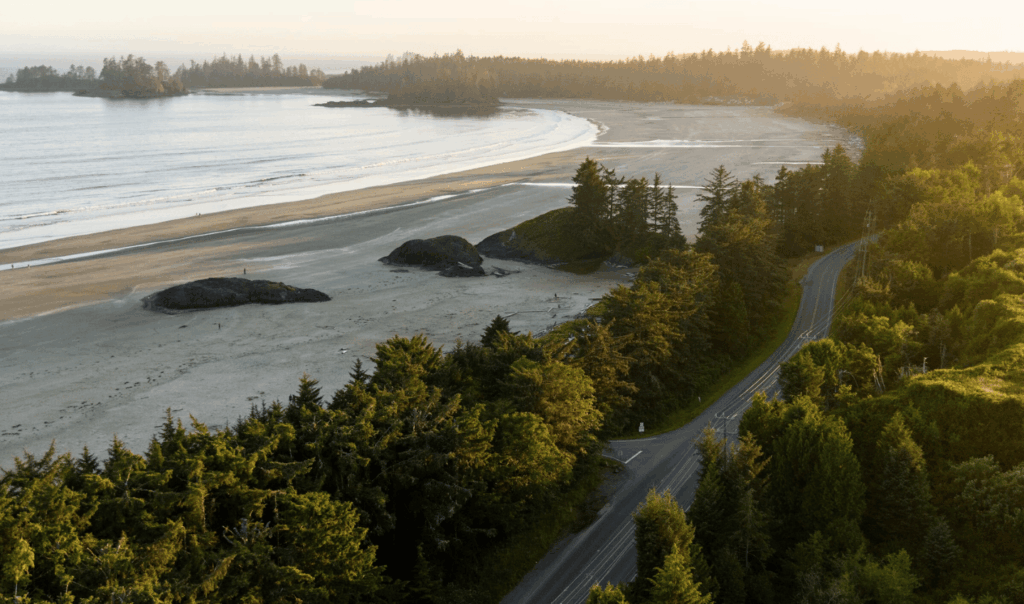

Pacific Rim National Park Reserve
Pacific Rim National Park Reserve protects a spectacular stretch of Vancouver Island’s west coast featuring long sandy beaches, lush old-growth rainforest, iconic coastal hiking trails and important First Nation archaeological sites. Boasting some of the most dramatic landscapes, it also offers excellent wildlife watching opportunities, with visitors getting to see grey whales, humpbacks, orcas, sea lions and black bears.
Home to world-renowned locations like Tofino and Ucluelet and situated right next to the Clayoquot Sound Biosphere, the Pacific Rim is a centrepiece of many Vancouver Island road trips and outdoor adventures. It is also one of the easiest ways to combine rainforest, beaches, wildlife viewing and relaxed coastal towns in one multi-stop journey.
Best For: Surfers, hikers, families, photographers and coastal explorers, with excellent opportunities for things to do centred around nature and outdoor adventure.
Key Strengths
- Surf-friendly beaches
- Broken Group Islands
- West Coast Trail access
- Outstanding rainforest scenery
- Easy to access from Vancouver
Possible Limitations
- Rapidly shifting weather adds to the park’s drama, revealing its beauty in different moods and making every visit feel unique.
- High demand for permits and camping requires advance planning, but our Travel Experts take care of the details, ensuring a seamless, well-orchestrated experience.


How To Choose a Park For Your Trip
There are many ways to select a national park for your British Columbia holiday, and it all depends on what you’re looking for during your stay.
Choose Based On Region and Travel Flow
For efficient travel, pair nearby destinations into logical routes, or consider combining coastal and mountain destinations into larger coast-to-mountains circuits. This is where British Columbia really comes into its own: travellers can move from city stays to islands, rainforest, beaches, hot springs and alpine scenery without losing the sense of being immersed in nature.
Suggested multi-stop combinations include:
- Vancouver + Pacific Rim + Vancouver Island for city life, beaches and easy access to the wild Pacific coast
- Yoho + Kootenay + Glacier National Parks for a mountain-focused Rockies route
- Gulf Islands + Vancouver Island for kayaking, wildlife and relaxed coastal stays
Choose Your Park Based On Trip Length and Skill Level
Best for Short Trips
- Mount Revelstoke
- Gulf Islands
- Pacific Rim
Best for Long Weekend Adventures
- Yoho
- Kootenay
- Glacier
Best for Advanced Multi-Day Expeditions
- Gwaii Haanas
- Pacific Rim
- Glacier


Practical Logistics: Passes and Access
Visitors planning trips to national parks in British Columbia will be happy to know that multiple entrance options are available depending on the time of travel.
Each summer, the Canadian government offers a limited-time Canada Strong Pass, giving Canadians and international visitors free entry to national parks, national historic sites and national marine conservation areas for a two-month period. During the designated dates (announced annually), no entry pass or ticket is required—simply arrive and enjoy any participating sites that are open. As a result, these periods can be significantly busier, particularly at popular parks and attractions, so planning ahead is recommended.
Outside of this period, visitors can purchase a Parks Canada Discovery Pass. An Individual Pass provides unlimited admission for one person to over 80 sites for a full year, while a Group Pass covers up to seven people travelling together.
Entry is free for under 17s, and reduced rates are available for seniors aged 65+. An annual pass offers the best value if you plan to spend seven days or more exploring included sites; otherwise, day passes may be more cost-effective.
Travelling Tips for BC’s National Parks
Best Months for Wildflowers and Meadows
British Columbia has no less than four national parks with beautiful alpine scenery—so make sure to visit when the flora is at its best. The prime season for alpine wildflowers typically runs from July through early August, with Mount Revelstoke National Park offering some of the most breathtaking displays.
WILDLIFE SPOTTING BY SEASON
British Columbia’s national parks are rich in wildlife, and timing your visit can greatly enhance sightings:
Spring (May–June): Bears emerge from hibernation and are often seen along roadsides and valley bottoms, feeding on fresh vegetation. Elk, deer, and moose are also more active.
Summer (July–August): Wildlife is widespread at higher elevations; early mornings and evenings are best for sightings. Mountain goats and marmots are commonly spotted in alpine areas.
Fall (September–October): A prime time for wildlife viewing, particularly during the elk rut, when activity increases dramatically. Bears are also more visible as they forage before winter.
SEASONAL TRAVEL TIPS
Spring: Trails at higher elevations may still be snow-covered or muddy—waterproof footwear is essential. Some roads and facilities may remain closed until mid-June.
Summer: The busiest season—book accommodation and campsites well in advance. Start hikes early to avoid crowds and afternoon heat.
Fall: Cooler temperatures and fewer crowds make it ideal for hiking. Be prepared for rapidly changing weather and shorter daylight hours.
Winter (where accessible): Some areas transform into winter wonderlands, but access is limited. Check conditions carefully and be equipped for snow and ice.
Shoulder Season Advantages
While summer will always provide the best weather and most reliable conditions for visiting British Columbia’s national parks, late spring and early fall can have their advantages too. In fact, during the shoulder seasons visitors are likely to find:
- Smaller crowds
- Better accommodation availability
- Pleasant hiking temperatures
- Improved photography opportunities, with softer light and seasonal colour changes
No matter the season, it’s always wise to check park conditions ahead of time and be prepared for changeable mountain weather.


Safety First
Follow these guidelines when visiting any national park in British Columbia, and you’ll be in for a good time:
- Maintain safe distances from wildlife
- Carry bear spray where recommended
- Check weather and trail conditions daily
- Understand tide schedules before coastal hikes
- Inform others of backcountry plans
Recommended Packing List
No matter when you choose to visit British Columbia’s national parks, it’s always good to come prepared. We highly recommend bringing different layers suitable for rapidly changing conditions including:
- Waterproof rain jacket
- Sun protection
- Warm insulating layers
- Hiking footwear
- Dry bags for coastal travel
- Camera and spare batteries
- Downloaded maps or have a physical map, as mobile signal can be limited or unreliable in remote areas
- Bear spray if going into backcountry


Ready to visit British Columbia’s Beautiful National Parks?
British Columbia rewards visitors who love exploring the great outdoors, and the province’s national parks easily deliver some of the most diverse and memorable outdoor travel experiences anywhere in North America. Few destinations make it so easy to build a nature-rich holiday around several contrasting landscapes in one trip.
Whether you’re planning a weekend escape or a province-wide adventure, British Columbia was made for multi-stop journeys that connect cities, coastlines, islands, rainforest, mountains and alpine environments. From wildlife-rich shorelines to glacier-backed trails, every stop can add a new natural highlight to the journey. Find your national park journey by checking out our curated selection of itineraries or get in touch today to plan your bespoke trip.
Image Credit: Destination BC/Ryan Creary, Kootenay Rockies Tourism/Mitch Winton, Destination BC/Abby Cooper, Destination BC/Brandon Hartwig and Destination BC/Yuri Choufour.
Inspire
Your edit for North America inspiration
Inspired by the landscapes, culture, wildlife and cuisine of Canada and the USA, explore our entertaining range of articles, travel tips, destination guides, recipes and much more.
View Extraordinary Inspiration



Meet Our Team
Real North America Travel Experts








Why Journeyscape?
We love north america
- Up-to-the-minute knowledge underpinned by 40 years experience
- All of our Travel Experts have personal knowledge of the destination
- A passion for the region runs through all we do
Travel with Confidence
- Fully bonded and licensed
- ATOL-protected
- Book with confidence, knowing every penny is secure
- 24 hour help available at every step of your journey
The Real North America
- Our insider knowledge helps you go beyond the guidebooks
- We hand-pick hotels both for their character and services
- We'll give you authentic experiences based on your personal preferences
Journeyscape brought to you from the award-winning experts at Journey Latin America
