Washington, DC Reimagined: Classic Icons, Hidden Corners and New Ways to Explore the Capital


Washington, DC, courtesy of Washington.org
Want to experience Washington, DC beyond the classic monuments? From powerful history and local culture to characterful neighbourhoods and diverse food scenes, there’s so much to discover in the capital of the United States. This guide takes you on a journey through Washington, DC’s distinct neighbourhoods, each offering its own story, atmosphere and hidden gems. Whether you’re planning your first visit or returning to uncover corners you missed, explore the city in a way that feels fresh, authentic and a little unexpected in this: a local’s guide to Washington DC.
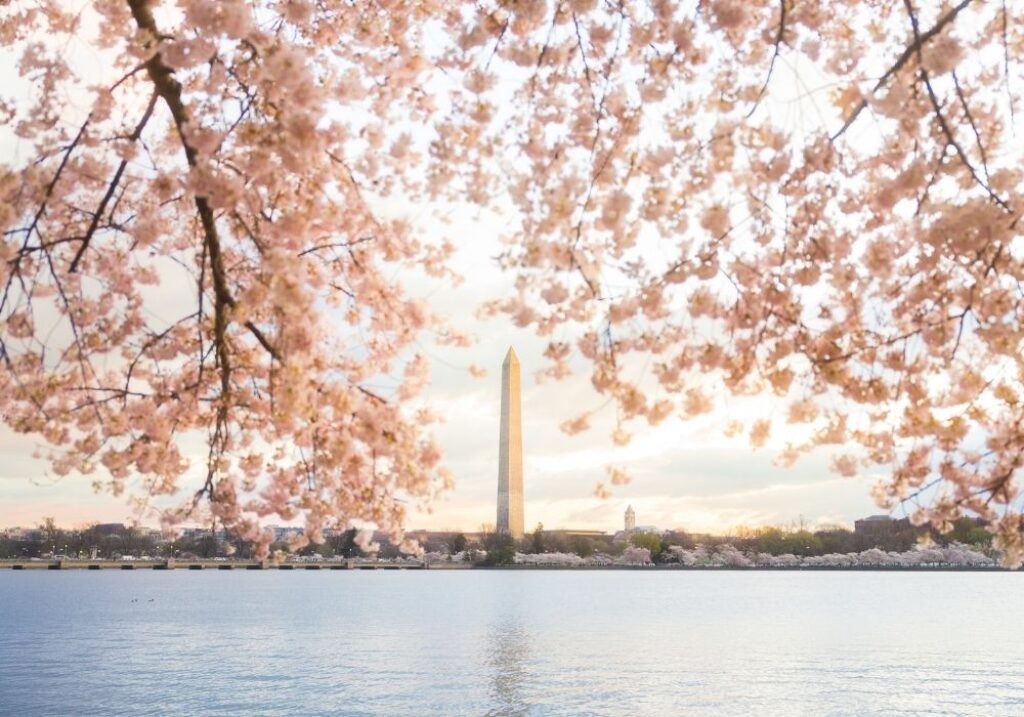

Washington Monument, Tidal Basin, courtesy of Washington.org
New Ways to See the Classics: National Mall and Capitol Hill
The Lincoln Memorial, U.S. Capitol Building and Smithsonian Museums aren’t boxes to tick off a checklist—they’re genuinely extraordinary. But the difference between a rushed visit and a memorable one comes down to timing and approach. Here’s how to experience DC’s most famous monuments with fresh eyes:


Lincoln Memorial, courtesy of Washington.org
Lincoln Memorial and the Mall Beyond Midday Crowds
The western end of the National Mall holds DC’s most powerful concentration of memorials, and timing your visit here makes all the difference.
Pre-7 a.m. loop: Arrive around 6:00–6:30 am if visiting in spring or summer. Start at the Lincoln Memorial and stand on the steps where Martin Luther King Jr. delivered his famous “I Have a Dream” speech in 1963. From there, walk to the Vietnam Veterans Memorial, pass the Korean War Veterans Memorial and continue along the Tidal Basin to the Martin Luther King Jr. Memorial before completing your walk at the breathtaking Thomas Jefferson Memorial. Midday brings thousands of visitors; dawn brings a handful.
Photo vantage points: Frame the Washington Monument across the Reflecting Pool at sunrise. The light is soft, the crowds are non-existent and you’ll have space to actually take in former president Abraham Lincoln’s 19-foot statue without jostling for position.
Return after dark: Almost all the monuments in the nation’s capital look particularly striking at night, so don’t feel obligated to fit them in during the day. Plus, the evening light offers great opportunities for photography.
Cherry Blossom Season: Major attractions aside, Washington, DC is known for its beautiful cherry blossoms, gifted by the mayor of Tokyo in 1912 as a symbol of friendship between the United States and Japan. Witness the nearly 3,000 cherry blossom trees during the annual National Cherry Blossom Festival which takes place in early April around the Tidal Basin and across various events around the city.


Library of Congress, courtesy of Washington.org
Inside the U.S. Capitol Building and Around People’s House
Capitol Hill feels entirely different when you combine official tours with unstructured wandering through surrounding streets—mix up the main sights with relaxed strolls through the neighbourhood. You’ll find tasty eats, public markets and a real sense of this nationally-important neighbourhood.
Booking strategy: Choose early morning tour slots at the U.S. Capitol Visitor Center to avoid school groups (which peak 9 a.m.–noon). Tours cover the Rotunda, National Statuary Hall (originally the House chamber from 1819–1857), and the Crypt.
Free Capitol tours: Tours run 45–60 minutes and include the 180-foot Rotunda with its Apotheosis of Washington fresco, National Statuary Hall and the Crypt. If Congress is in session, ask about watching from the House or Senate galleries. A valid international ID is required.
Pair with the Library of Congress: Walk across the street to the Jefferson Building—book a timed entry to see the Great Hall’s Gilded Age mosaics and peer into the Main Reading Room from the viewing gallery. The Library of Congress is the largest library in the world, and has one of the most beautiful interiors in the whole of Washington, DC.
Supreme Court: When the Court is in session (October–June), you can attend oral arguments by lining up around 8:30 a.m. Even when not in session, the building’s exterior and public lectures offer civic depth.
White House Reality Check: Interior tours of the White House are extremely limited (just about 50 per day via congressional offices), so head an 8-minute walk away to The People’s House where you’ll find an immersive, educational and free White House experience. You’ll get to stand in a full replica of the Oval Office, see what it’s like to eat in the State Dining Room and learn all about White House history—while still getting to feel the weight of Pennsylvania Avenue’s history.
Eastern Market: A must-visit for lover of fresh, locally sourced food and drink, it’s also a wonderful stop for arts and crafts lovers too. Start your day here with breakfast if you’re visiting on the weekend, or head here after the major sights for lunch or dinner. If you’re looking for an exceptional dinner spot, try Old Ebbitt Grill, Rose’s Luxury or the Michelin-starred Pineapple and Pearls.


Smithsonian National Air and Space Museum, courtesy of Washington.org
Rethinking the Smithsonian Museums: Depth Over Quantity
The Smithsonian Museums boast 17 museums and galleries, and first-time visitors often try cramming all of these incredible free museums into two days. While this might be feasible for some, to truly enjoy the world-class exhibits, it’s best to take your time—even if that means you don’t get to see everything. After all, it gives you the perfect excuse to plan a return visit.
The two-museum max rule: Pick 1–2 museums per day and actually linger. You’ll remember far more from a focused three hours than from a frantic six-museum sprint.
Smart pairings:
- Visit the Washington Monument and the National Museum of African American History and Culture – the latter has one of the best museum cafes around, Sweet Home Café, which celebrates African American culinary traditions.
- Combine the National Gallery of Art, home to the only Da Vinci in the Americas with the National Museum of Natural History, home to the Hope Diamond and the fascinating dinosaur halls. Each rival the respective galleries and museums in London.
- Pair a visit to the American History Museum with a trip to The National Archives. Both offer deep insight into how the United States came into being and you’ll see iconic artefacts like the original Star-Spangled Banner.
Book ahead: Free timed tickets can eliminate any long waits standing in line.
Lesser-known Smithsonian gems: The National Gallery of Art Sculpture Garden features a garden café, jazz concerts in the summer months and ice skating in the winter months; the Freer Gallery’s Peacock Room is stunning – especially when lit; and the quiet Smithsonian Gardens situated between museums offer breathing room between the crowds.


Washington, DC Rowhouses, courtesy of Washington.org
Beyond the Monuments
Once you leave the National Mall, Washington DC starts to feel like a completely different city—and it is. The capital is characterised by its unique neighbourhoods, each offering distinct architecture, history, culinary scenes and vibes. Take a tour around each of these districts or pick your favourites below to experience a whole new side to DC on your next visit.


Franklin Park with Planet Word, courtesy of Washington.org
Downtown and Penn Quarter:
A hop and a skip away from Capitol Hill, this neighbourhood boasts equally interesting sights and museums that continue the educational and historical offerings found along the National Mall and Capitol Hill—with the addition of popular restaurants and bustling nightlife adding to the mix.
Support Women Artists: The National Museum of Women in the Arts (NMWA) is the first museum in the world dedicated solely to championing women through the arts, bringing to light important women artists of the past while promoting the great women artists of today.
Sports & Entertainment: The Capital One Arena is home to DC’s major sport teams from the NHL, NBA and WNBA—while just a 5 minute walk away lies DC’s major shopping centre, CityCenter DC.
Planet Word: The only museum in the country dedicated to renewing and inspiring a love of words and language, visitors get to use the museum’s state-of-the-art technology to determine their on-site experience through their own words and choices. A bold and imaginative place not to be missed.
Delectable Dining: End your day with dinner downtown at local favourites like Rasika, Moon Rabbit or Zatyina, or take the weight off with drinks at a speakeasy like The Mirror or Silver Lyan, which is interestingly located inside a bank vault.
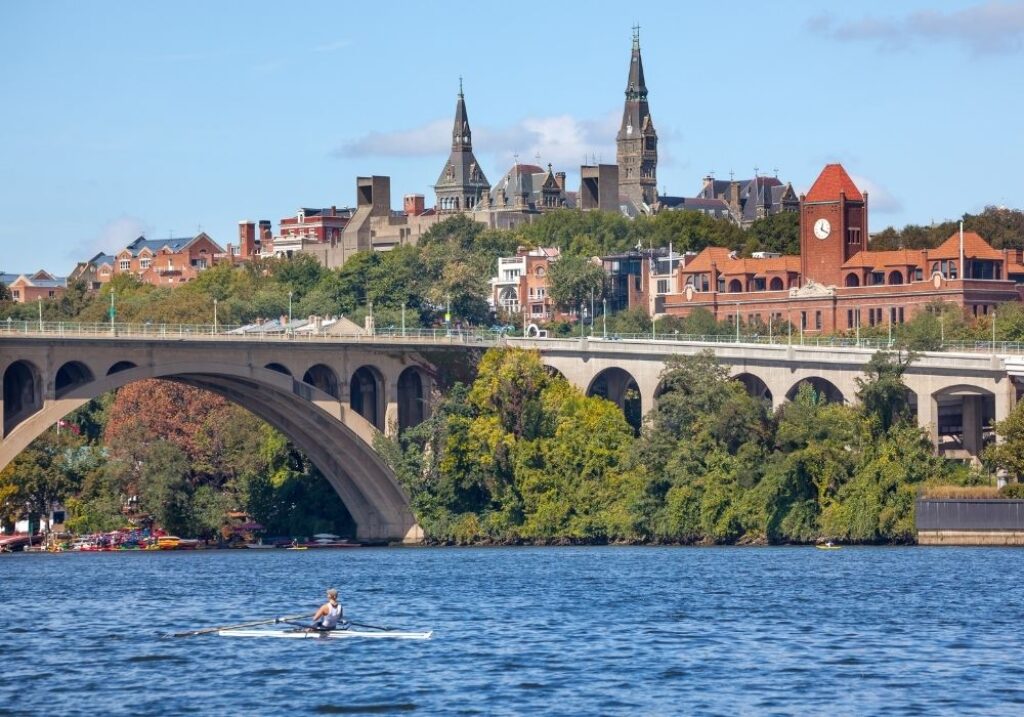

Key Bridge Georgetown, courtesy of Washington.org
Georgetown and Foggy Bottom
Predating the establishment of DC itself, Georgetown was founded in 1751, not after George Washington, but as a tobacco port town for neighbouring Maryland. Today however, it’s known as a wonderful location for independent shopping, dining, arts & culture, historic houses and home to one of the USA’s prestigious universities. The main streets like M Street and Wisconsin Avenue are incredibly charming with pubs, cafes, antique stores and excellent local shopping.
C&O Canal Towpath: This 184-mile path (now a national park) begins at Key Bridge. Walk a mile along the restored canal to glimpse 19th-century industrial DC amid upscale townhouses.
Residential backstreets: Head north of M Street to N, O, and P Streets for cobblestone lanes, Federal-style homes from the 1790s, and leafy hidden alleys like Volta Place. Martin’s Tavern, a neighbourhood institution, sits nearby.
Paddle on the Potomac River: Pick a warm, sunny day and rent your gear from one of the boathouses around Georgetown’s Waterfront Park, and paddle to Theodore Roosevelt Island’s 88-acre wilds or downstream towards the Kennedy Center—some vendors even offer guided tours – and the sunset views are gorgeous.
Live Jazz at Blues Alley: The oldest, continuously operated jazz supper club in America, this local landmark and international jazz icon has hosted every major jazz artist from Ella Fitzgerald to Count Basie, Dizzy Gillespie, Tony Bennett and Wynton Marsalis.
Waterfront eats: Georgetown boasts waterfront dining with DC staples like Founding Farmers Fishers & Bakers and Filomenia well worth a stop for a bite.


The Phillips Collection, courtesy of Washington.org
Dupont Circle and Adams Morgan
One of the centres of DC’s vibrant international culture, this neighbourhood is known for its eclectic history, walkable art scene and quirky daytime landmarks – from world embassies to incredible art galleries and iconic institutions, these places you won’t want to miss.
Embassy Row: Take a self-guided walking tour along the 2-mile stretch along Massachusetts Avenue known as Embassy Row, where you can make your way past dozens of diplomatic missions and sights including the Mahatma Gandhi Memorial and the Nelson Mandela statue. If you happen to be visiting during the month of May, you’ll even get to enter the embassies and attend cultural experiences during the annual Passport DC event.
National Geographic Museum of Exploration: A fascinating new opening in DC, this museum promises visitors the opportunity to experience the world like never before through immersive experiences and museum exhibits that reveal the wildlife, landscapes, communities and cultures that make up our incredible planet. Projected opening is June 26, 2006.
Modern Art: The Phillips Collection is America’s first and arguably also one of its finest museums of modern art, featuring over 5,000 masterpieces from Renoir to Rothko. A must for contemporary art fans, visitors will also find dozens of small art galleries in the vicinity to visit afterwards.
Dupont Circle: One of DC’s most iconic landmarks outside of the National Mall, this beautiful fountain serves as a gathering place ideal for people watching and stopping for a picnic.
Tasting Menus: DC’s Michelin scene reflects its global, political character. The 2025 guide lists no less than 9 starred restaurants, with many restaurants around the city recommended in the Michelin guidebook. Dupont Circle and Adam Morgan are both home to many upscale offerings including Tail Up Goat, Lucky Buns, Perry’s and Lyle’s.
Indie Bookshops: Stock up on political essays, literature, novels and travels guides at DC famed indie bookstore Kramers. Fill up on a tasty bite after picking out your reading material or stay late for the steady line-up of renowned author readings.
LGBTQ+ Culture: The neighbourhood of Dupont Circle has a long history of being the cornerstone of Washington DC’s LGBTQ+ culture with local landmarks like Annie’s Paramount Steakhouse providing a welcoming haven for over 75 years.


Ben’s Chili Bowl, courtesy of Washington.org
U Street and Shaw
Once the heart of the city’s jazz scene, formerly known as “Black Broadway” – a thriving cultural district during the Great Migration where Duke Ellington and other jazz legends performed – today, Shaw is still thriving with creative energy in its music halls and cultural spaces. Centred around U Street NW between 7th and 9th Streets, you’ll find yourself walking through living history in these neighbourhoods.
Architectural anchors: The Howard Theatre (built 1910, restored 2010) and Lincoln Theatre (built 1922, restored 1994) still host live music. Even if you don’t catch a show, their beautiful façades tell the neighbourhood’s story.
African American Civil War Memorial and Museum: Located near the U Street Metro, this site honours 209,000 Black Union soldiers, and provides essential context for understanding Washington, DC’s Black history.
Little Ethiopia: Experience Ethiopian culture in the largest Ethiopian community outside Africa. Here, you can taste the country’s delightful cuisine and coffee culture and experience the friendly hospitality and generational stories behind long-running establishments.
Ben’s Chili Bowl: Open since 1958, this U Street institution served half-smokes (a hot dog style dish) to civil rights protesters, musicians, and yes, former President Obama in 2009. It’s not just a restaurant—it’s a landmark for DC locals.
14th Street: The bar and restaurant hub of U Street and Shaw, staples in this area include Le Diplomate, Gypsy Kitchen, Colada Shop, Doi Moi, Dacha Beer Garden and the award-winning cocktail bar, Jane Jane.
Street Art: Murals line U Street and nearby alleyways, including portraits of Black cultural figures and the 2020 “Say Her Name” piece. This is DC’s street art heartland.


The Wharf, courtesy of Washington.org
Capitol Riverfront, Southwest and The Wharf
Located just south of the National Mall, this area boasts DC’s newest and most sustainability-focused neighbourhoods with recent transformations bringing beautiful boardwalks, upscale hotels, rooftop bars, great dining and water-based activities to the people of DC.
Cruise the Potomac River: Dinner or sunset cruises from The Wharf offer spectacular illuminated views of the major monuments without having to paddle. You’ll also get to see Arlington National Cemetery from across the river.
International Espionage: If you’ve ever been interested in the world of espionage spend a few hours visiting the International Spy Museum, which houses the world’s largest collection of spy artefacts. Visitors are also invited to explore the museum through an undercover mission – making it a must-see attraction for families.
Delightful Dining: Here, you’ll find an eclectic mix of restaurants, from upscale Michelin guide recommendations like Chloe and Pink Tiger to seafood staples like Fish Shop and Hank’s Oyster Bar. Moonraker offers some of the riverfront’s best views.


U.S. National Arboretum, courtesy of Washington.org
Northeast DC
This up-and-coming district spread across NoMa, Ivy City and H Street represents modern DC at its most energetic. A creative, ever-changing space full of food stalls, pop-ups, murals and creative workshops spread across former industrial buildings, visitors will also find some of Washington, DC’s most breathtaking green acres.
Union Market: The epicentre of culinary creativity in DC, this food hall occupies a 1920s warehouse and is home to over 40 vendors. Great for breakfast, lunch and dinner, there’s also a wonderful Latin American market, La Cosecha, which highlights local Hispanic heritage through delightful dining and open salsa dancing.
Ivy City: Showcasing DC’s maker culture, here, historic warehouses have been transformed into distilleries, wineries and small-batch producers. Tour one of many world-class distilleries, sample local gin or rum, then linger in a tasting room or rooftop bar with Capitol dome views.
National Arboretum and the Capitol Columns: Spanning 446 acres in northeast DC, the U.S. National Arboretum is vast, under-visited and home to one of Washington’s most photogenic secrets: Capitol Columns. These 22 original sandstone columns from the U.S. Capitol Building (built in the early 1800s) were relocated here in 1981 after the East Front extension. They now stand quietly like Greek ruins in an open field, framing views back toward the city skyline—and the contrast is stunning. There are also numerous walking trails to explore, and the beautiful on-site National Bonsai & Penjing Museum ensures a full morning or afternoon visit.
Kenilworth Aquatic Gardens: Easily Washington, DC’s most unexpected escape and situated just across the Anacostia River from the National Arboretum, Kenilworth Aquatic Gardens is home to 12 acres of ponds with more than 100 lily varieties and boardwalks which cross into the Anacostia wetlands. Bird-watching opportunities include herons and 200+ species, and summer’s blooming lotus alone are worth a reason to visit.


Washington National Cathedral, courtesy of Washington.org
Woodley Park and Upper Northwest
Washington, DC wasn’t designed solely for monuments—and this part of the city proves it. Pierre L’Enfant’s 1791 original city plan incorporated expansive green spaces, and today, DC offers over 8,000 acres of picturesque parkland— covering almost 20% of the entire city. If you like the great outdoors, make sure to incorporate a visit to this area as part of a wider DC trip.
A Wild Corridor Through the City: Rock Creek Park surprises international visitors—totalling 1,754 acres of forest cutting north to south through DC, it boasts miles of wooded trails, 40 species of wildflowers, picnic areas and historic structures that make you forget you’re anywhere near a capital city. Plus, as the only national park with an on-site planetarium, take advantage of the free ranger-led programmes every weekend.
Pair with nearby sites: Located within Rock Creek Park, the historical Peirce Mill offers a trip back in time, while the neighbourhoods of Cleveland Park and Adams Morgan are nearby for post-hike dining. Local favourites include Bread Furst, Duke’s Counter and Taco Bamba.
Hillwood Estate, Museum & Gardens: The Hillwood Estate was the home of Marjorie Merriweather Post—cereal heiress, socialite, and one of the 20th century’s most ambitious collectors. Here, visitors will find grand interiors, beautifully curated gardens – which even offer blooms in every season – and a glimpse into a more private side of DC history and Gilded Age diplomacy. This is a unique chance to see a collection of Russian imperial art (including 14 Fabergé eggs and Romanov icons), French decorative arts and an extraordinary assemblage post acquired from Soviets selling treasures in the 1930s.
Washington National Cathedral: Boasting striking neo-Gothic architecture, a medieval-style garden and no less than 122 gargoyles, the National Cathedral is the sixth largest cathedral in the world—and is well worth a stop. With 215 stained-glass windows, Gothic spires and flying buttresses, few would guess the National Cathedral was constructed during the 20th century. Visit the stunning interior – which even holds a piece of the moon – or climb higher with one of the docent tours.


Enid A. Haupt Garden, Smithsonian Castle Gardens, courtesy of Washington.org
When to Visit DC:
Washington, DC is a year round destination with festivities occurring in every season. Most people find the best weather is during spring and fall when the temperatures are mild and a pleasant, around 15°C to 21°C. Summer is warm and typically humid, while winter is chilly and wet. No matter when you choose to visit, these annual events are free for all to attend:
| Spring | Summer | Autumn | Winter |
|---|---|---|---|
| National Cherry Blossom Festival | DC JazzFest | Adams Morgan Day | National Christmas Tree Lighting |
| Passport DC | Smithsonian Folklife Festival | Walkingtown DC | Downtown DC Holiday Markets |
| Smithsonian Craft Show | Capital Pride | Snallygaster Craft Beer Festival | Restaurant Week |
| Restaurant Week |
Getting to and Around Washington, DC:
- Washington, DC is directly accessible from most major airports in the UK.
- DC’s Metro provides excellent coverage for getting around the city with 98 stations across its 129-mile network.
- Visitors can take the Metro’s Silver Line from Washington Dulles International Airport (IAD) directly to Downtown DC.
- Capital Bikeshare connects neighbourhoods efficiently and is also a top choice for DC locals.
- Washington, DC is a walkable city, and most locations are reachable in less than a half hour.
- Building restrictions in DC keep sightlines open so you can often orient yourself by spotting the Washington Monument or Capitol Dome from almost anywhere in the city centre.


National Gallery of Art Sculpture Garden, courtesy of Washington.org
Ready to Visit Washington, DC?
Ready to experience Washington, DC beyond the classic monuments? From characterful neighbourhoods and diverse food scenes to powerful history and local culture, our Travel Experts will take you off the beaten path.
Explore our curated DC itineraries, highlighting both iconic sights and lesser‑known gems—think Georgetown’s cobbled streets, U Street’s jazz heritage, Shaw’s murals, and the buzz of The Wharf.
Prefer something tailored? Our Travel Experts can design a trip that matches your interests—whether that’s neighbourhood exploration, Black history, standout dining, hidden museums or a bit of everything.
Ready to see DC differently? Speak to our Travel Experts and start planning your next city escape.
Inspire
Your edit for North America inspiration
Inspired by the landscapes, culture, wildlife and cuisine of Canada and the USA, explore our entertaining range of articles, travel tips, destination guides, recipes and much more.
View Extraordinary Inspiration



Meet Our Team
Real North America Travel Experts







Why Journeyscape?
We love north america
- Up-to-the-minute knowledge underpinned by 40 years experience
- All of our Travel Experts have personal knowledge of the destination
- A passion for the region runs through all we do
Travel with Confidence
- Fully bonded and licensed
- ATOL-protected
- Book with confidence, knowing every penny is secure
- 24 hour help available at every step of your journey
The Real North America
- Our insider knowledge helps you go beyond the guidebooks
- We hand-pick hotels both for their character and services
- We'll give you authentic experiences based on your personal preferences
Journeyscape brought to you from the award-winning experts at Journey Latin America
